

When we visited Belize in 2018, we knew we’d be snorkeling as soon as we got to the coast – DUH. But we realized as our trip got closer that we’d also accidentally planned to go at the perfect time of the month to see whale sharks. Even though we’re not snorkeling beginners, we figured it probably wouldn’t be TOO different from the reef snorkeling we had done if we ventured outside the Belize barrier reef to try to deep water snorkel with whale sharks. Y’all, we could NOT have been more wrong. So, whether you’re looking for a beginners snorkeling comparison, or are a seasoned reef snorkeler hoping to understand what you’re getting into when you decide to try deep water snorkeling, we’ve written up a few of the differences we encountered below.
Deep water snorkeling vs. reef snorkeling, difference #1: Visibility


Usually, reef snorkeling means you’ll have clear views of everything around you. Snorkeling off of Culebra’s beautiful beaches, we could see straight to the bottom with no issue. Even in Belize’s Silk Cayes, when recent storms had left plenty of stirred-up sediment in the water, we could still see all the coral and fish very easily. You can see in the gallery that the nurse sharks weren’t super clear on our Silk Cayes dive, but that green turtle near Culebra sure was!

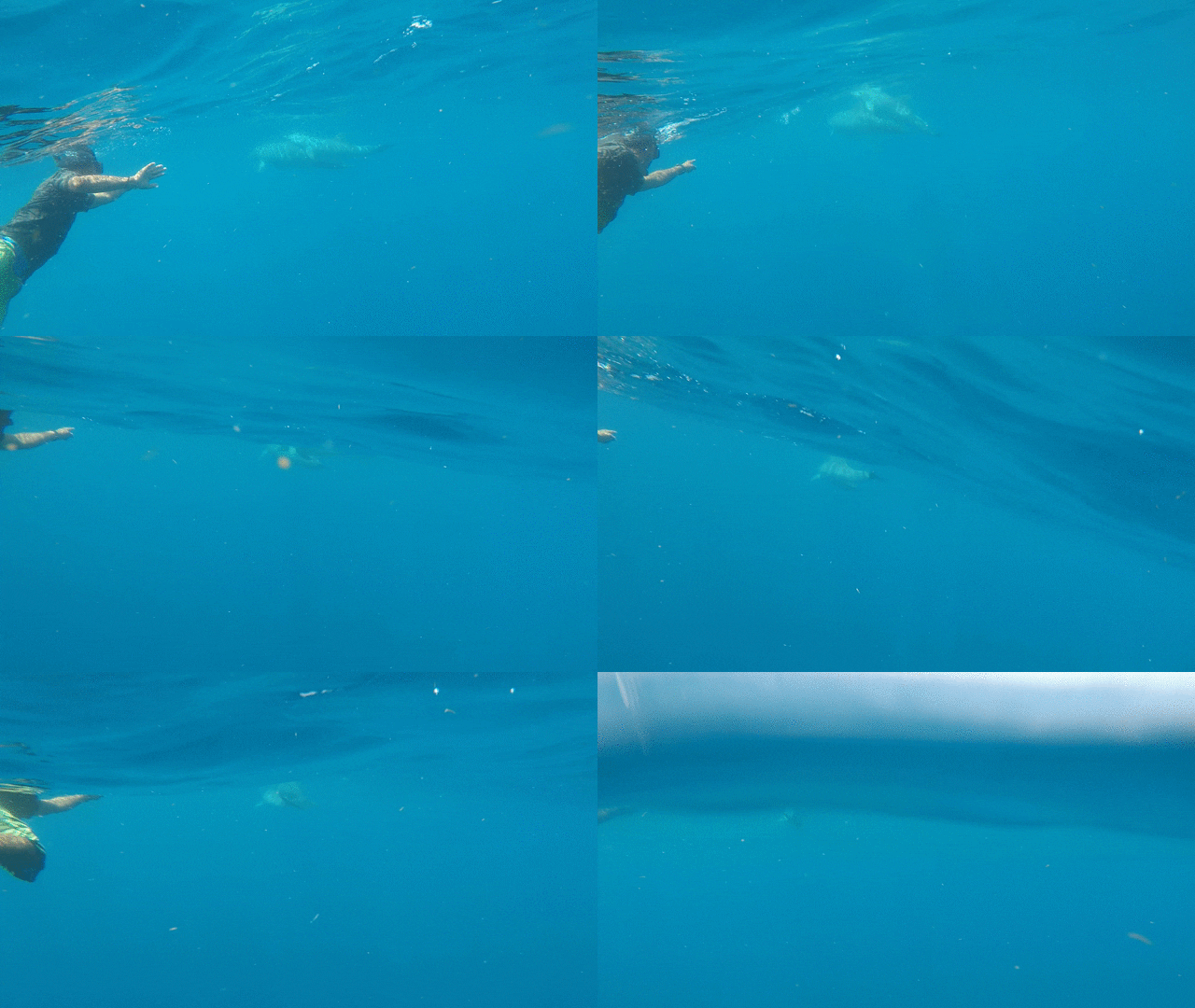
But deep water snorkeling at Gladden Spit gave us an entirely different experience. Where those storms left a little sediment in the water on the reefs, the open water became one giant, opaque blue sheet. So much so, that it probably ended up being a good thing that we didn’t sight any whale sharks, because visibility wouldn’t have been fantastic for such an amazing experience.
Boyfriend Perspective: In the very blue clip above, we were told visibility was quite poor that day, but we never complained. In Virginia open water, you’re lucky to see your hand in front of your face on the best day. We measure visibility in inches not feet.
Reef snorkeling vs. deep water snorkeling, difference #2: Currents, waves, and level of effort

Reef snorkeling has to rank as one of the most relaxing and beautiful experiences we’ve found we can have in the water. As we’ve said, the water is typically calm, clear, and lacking any discernible current. As long as you feel comfortable gently finning around, following your guide and enjoying the scenery, you’ll have a wonderful time. If you’re looking for great beginners snorkeling (or really enjoyable veteran snorkeling, who are we kidding!) this is the way to do it.

In stark contrast, deep water snorkeling has the potential to give you a workout and a half. When we tried to deep water snorkel with whale sharks in Belize, we had to try to keep up with the scuba divers below us. Because the current they followed was different than ours, we ended up swimming quickly against very strong surface currents to try to keep up. And, like swimming against rip currents, if you stop to catch your breath, you’ll find yourself even further from where you need to be. The difficulty was magnified by the 6-8 foot swells we experienced, caused by nasty weather fronts sweeping through in the days prior. Between exhaustion, seasickness, and having our snorkels consistently overwhelmed by waves, that outing ranks as one of the hardest excursions we’ve ever attempted.
Boyfriend Perspective: TL;DR: Unless the open water is unusually calm when you snorkel, be prepared for a workout and maybe an unhappy stomach. Be sure to take precautions for motion sickness, even if you aren’t prone to it.
Deep water snorkeling vs. reef snorkeling, difference #3: Experience in the dive boat


In our experiences with reef snorkeling, dive boats (if they’re even needed) merely serve the role of transportation. There’s almost always land you can snorkel from, as in Belize’s Silk Cayes, and we’ve even had the experience of kayaking to our snorkel drop point, like we did in Culebra, Puerto Rico. Because reefs typically have pretty calm water, the journey is always a smooth one and the boat is rarely needed past the initial drop off and final pickup. For beginners snorkeling, this is probably the place to start.
By contrast, in open water, dive boats (on the left above) serve as your only place to rest after a whole lot of work. But, especially if the weather feels uncooperative on your deep water snorkeling trip, sitting in the dive boat for more than a moment can also lead to quite literally the worse sea sickness of your life – even if you’ve never shown any tendency towards motion sickness. Ask us how we know…
Boyfriend Perspective: My stomach wasn’t the happiest on this trip because, having never been in 6-8 foot waves, I was REALLY not prepared. After swimming a bit, I had to get back in the boat because of nausea. I lost my breakfast to the deep blue, skipped lunch, was then told I would feel better back in the water… and quickly emptied what was left in my stomach while IN the water. Moral of the story, you may get sick in the water or on the boat and neither was better for me.
Reef snorkeling vs. deep water snorkeling, difference #4: Wildlife


It’s impossible to go wrong here. By nature, reefs play host to countless types of creatures that seek calmer waters and safety from predators. While reef snorkeling in Belize and Puerto Rico, we’ve had the pleasure of snorkeling alongside innumerable colorful, tropical fish; plus, squid, sea urchins, starfish, jellyfish, and many more. And near reefs, you’ll find slightly more predatory creatures that enjoy scavenging fisherman leftovers or picking off reef dwellers. We’ve had the privilege of reef snorkeling with nurse sharks, rays, and two different types of sea turtles when snorkeling just off reefs.
Deep water naturally plays host to a whole different caliber of creatures. Here, expect to deep water snorkel alongside GIANT schools of fish traveling together for safety since they don’t have coral to hide in. You’re also more likely to run into larger sea life like wild dolphins, and have somewhat rarer encounters with whales and whale sharks and the like.
Boyfriend Perspective: Another TL;DR: While reef snorkeling is usually a never-ending meal for your eyes, open water snorkeling by contrast is more feast or famine.
Deep water snorkeling vs. reef snorkeling have at least one similarity: Look but have no impact!

The thing that anyone who ventures in the water should keep in mind: look with your eyes, not with your hands. Seriously. Our whale shark snorkeling guides told us that at least one diver had already been fined $10,000USD that year for touching a whale shark. And if even if you’ve decided to stay on the reef, coral can be very fragile and touching by human hands can cause irreparable damage. Plus, some coral can actually cause you a LOT of pain if you touch it (lookin’ at you, fire coral).
Boyfriend Perspective: I’m not knowledgeable enough to know what wouldn’t hurt me in a reef, so I stick to the “I’m scared to touch anything” rule. It’s worked out so far.
Also, never ever dump anything man-made into the water. We’ve been instructed by guides that it’s okay to toss leftover food overboard, but everything else should stay in the boat to be disposed of properly. Otherwise, you’ll contribute to the many sea creatures who die getting trapped in or even eating bits of plastic and other garbage left by the careless.
So, regardless of where in the world you decide to dip your fins in the water, always stay respectful of the wildlife and the environment.
Reef snorkeling vs. deep water snorkeling: Safety

As a snorkeling beginner, if you’re not comfortable swimming on your own, every reputable guide company will have you covered with life jackets and potentially other swimming aids. Personally, even when reef snorkeling, I almost always snorkel with a life jacket because I’m not the world’s strongest swimmer, and I’d rather relax and float than have even the smallest worry. Luke swims much better than I do, so rarely ever uses one, but we both have an equally good time when we do decide to snorkel a new area. For deep water snorkeling, though, we both ended up with life jackets, because swells like that can get tiring for even the most proficient swimmers if it’s not something you have frequent exposure to.
Boyfriend Perspective: Look at those shoulders!! White as porcelain.
Snorkeling supplies to bring whether you deep water snorkel or reef snorkel
-
Rash guards!
- We both made the mistake of forgetting to wear our coverups/t-shirts on the dive boat back from our whale shark snorkeling trip, and ended up EXTREMELY burnt from reflections off the water. This meant that, 48 hours later, when we went to snorkel off the Silk Cayes, we both worried about worsening our burns and ended up swimming in t-shirts. We both now have long-sleeve rash guards
that we religiously bring with us on any snorkeling or swim-heavy trip. Shop men’ss rash guards
- We both made the mistake of forgetting to wear our coverups/t-shirts on the dive boat back from our whale shark snorkeling trip, and ended up EXTREMELY burnt from reflections off the water. This meant that, 48 hours later, when we went to snorkel off the Silk Cayes, we both worried about worsening our burns and ended up swimming in t-shirts. We both now have long-sleeve rash guards
-
SPF 25 Beauty By Earth biodegradable sunscreen
- Sunscreen is an absolute must, but keep in mind that reefs comprise a number of sensitive life forms, many of which don’t do well with the chemicals found in typical sunscreens. For the bits of you that you don’t cover with a rash guard, use sunscreen that protects you AND the environment. We’ve had good luck with this brand, and have heard of others who have, as well. Shop SPF 25 Beauty By Earth biodegradable sunscreen
now.
- Sunscreen is an absolute must, but keep in mind that reefs comprise a number of sensitive life forms, many of which don’t do well with the chemicals found in typical sunscreens. For the bits of you that you don’t cover with a rash guard, use sunscreen that protects you AND the environment. We’ve had good luck with this brand, and have heard of others who have, as well. Shop SPF 25 Beauty By Earth biodegradable sunscreen
-
GoPro HERO 6
- DUH, GoPros are awesome. That said, we’ve used other all-weather/watertight cameras and have had good results, as well. The GoPro just has more features, more resiliency, and a more compact build, making it perfect for travel. Shop the GoPro HERO 6
now
- DUH, GoPros are awesome. That said, we’ve used other all-weather/watertight cameras and have had good results, as well. The GoPro just has more features, more resiliency, and a more compact build, making it perfect for travel. Shop the GoPro HERO 6
-
6” Dome Port Lens Cover for GoPro
- Sadly, since we had a fair bit of chop for both of our Belize snorkels, we didn’t get a chance to use the dome cover. However, we DID use the floating handle that comes with this dome, which detaches from the larger upper piece and is the perfect size and shape for easy gripping under water. Plus, it also floats if you happen to lose you hold on it, so you WON’T lose your equipment. Overall, this is one of our favorite things to bring along one tropical trips. Shop the 6” Dome Port Lens Cover for GoPro
now.
- Sadly, since we had a fair bit of chop for both of our Belize snorkels, we didn’t get a chance to use the dome cover. However, we DID use the floating handle that comes with this dome, which detaches from the larger upper piece and is the perfect size and shape for easy gripping under water. Plus, it also floats if you happen to lose you hold on it, so you WON’T lose your equipment. Overall, this is one of our favorite things to bring along one tropical trips. Shop the 6” Dome Port Lens Cover for GoPro
-
Dive Filters for GoPro
- If you like to go a little deeper down – like Luke does – instead of just saying on the surface – like I do – or if you’re a diver, you’ll definitely need red/magenta lenses for your GoPro to make sure you photos are crisp. But mainly, they hugely help reduce the amount of post-processing you’ll need to go through later. Shop dive filters for GoPro
now.
- If you like to go a little deeper down – like Luke does – instead of just saying on the surface – like I do – or if you’re a diver, you’ll definitely need red/magenta lenses for your GoPro to make sure you photos are crisp. But mainly, they hugely help reduce the amount of post-processing you’ll need to go through later. Shop dive filters for GoPro


Do you have any other great beginners snorkeling comparison tips? Any big differences or hacks you’ve found when deep water snorkeling OR reef snorkeling? Please share them below!
And pin this for later reference!

 Summer’s last hoorah at Burnside Farms: One of the prettiest sunflower fields in Virginia


