
If you plan to spend any time in BCN, there are more than a handful of famous buildings in Barcelona that you cannot miss experiencing, and chief among them reflect the indelible impression Antoni Gaudi made on this already beautiful city. You can easily schedule a Gaudi tour in Barcelona if you’re so inclined, but you can also map out significant Gaudi sites in Barcelona – including visiting Sagrada Familia, exploring the Barcelona Gaudi houses (like Casa Batlló), and finding the Park Güell salamander – and soak them in at your own pace via a combination of walking and cabbing around this easy-to-navigate city.
Table of Contents
Let’s start with visiting the Gaudi houses in Barcelona
Casa Vicens
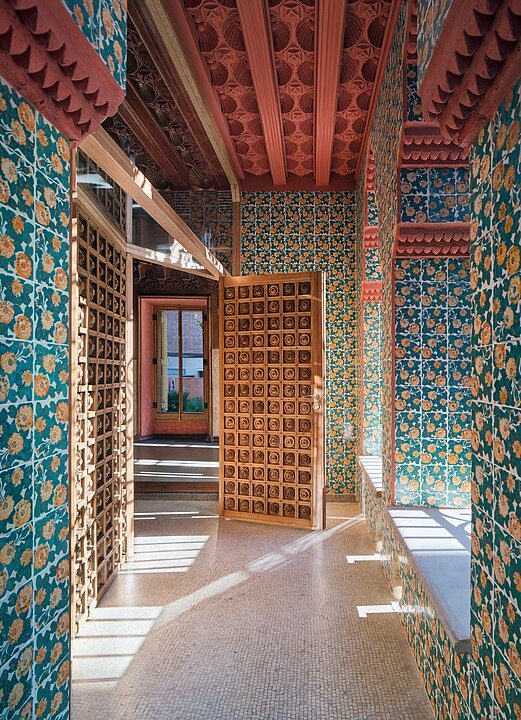
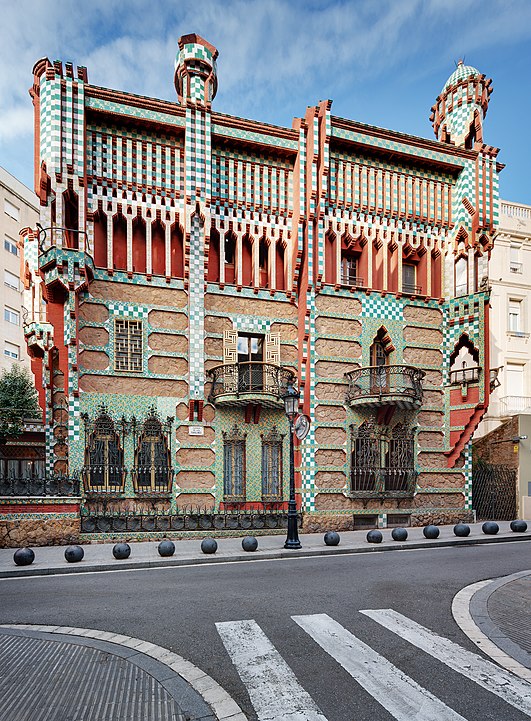
Before he became the controversial architectural figurehead we know today, Gaudi had a much smaller sphere of influence. The first impression he made on Barcelona was through the striking lampposts he designed for the Plaça Reial, in which you can already see the roots of his innovative style. He started garnering more attention when he got his first major commission, called Casa Vicens, and it’s here that we’d recommend you start your education about Gaudi in Barcelona.
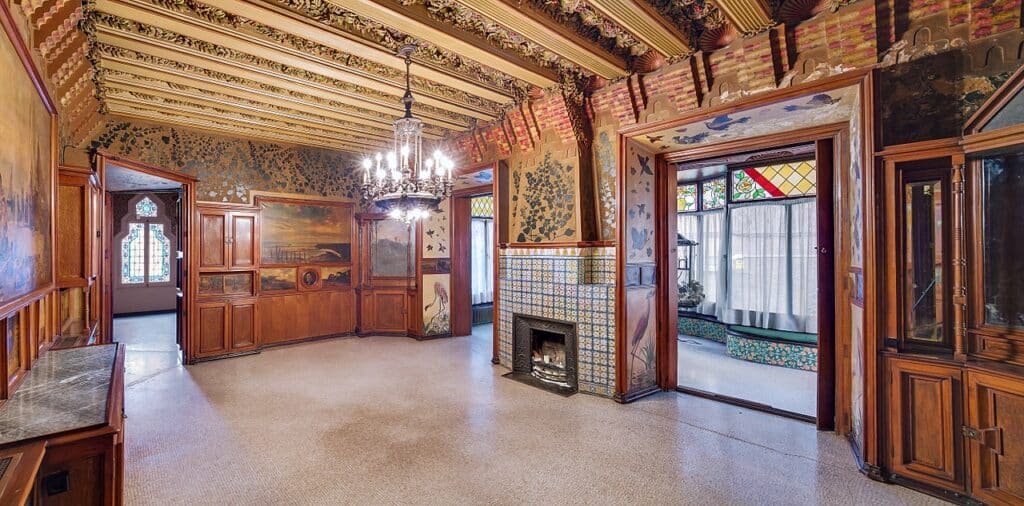
The building we now know as Casa Vicens was constructed for the Vicens family as a summer home in what is now the neighborhood of Gràcia which, at this time, was still its own entity separate from Barcelona. Casa Vicens took two years to complete in the 1880s, and while it doesn’t have the same flowing lines or dreamy quality that Casa Battlo does, it’s the first time we see Gaudi weaving together different media and disciplines – stonework, woodwork, metalwork, ceramic tiling, and beyond – especially within the Casa Vicens interior, to create architecture that is opulent, multidimensional, and almost experiential in nature. This beautiful example of modernism became a UNESCO World Heritage Site in 2005, and it opened as a museum – rather than continuing as a private residence – in 2017.
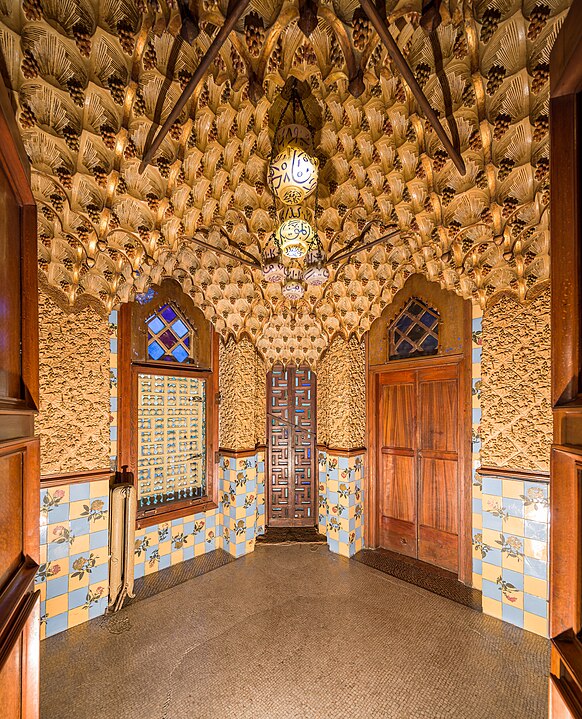

Today, you can purchase Casa Vicens tickets for a tour led by an expert guide (in English, Catalan, or Spanish), or you can experience other tours with the help of an audio guide in up to 15 languages. They also offer Casa Vicens tickets for a visit with a photo shoot included, which is a great option, especially if you feel like you’re always behind a camera and never in front of it. Regardless, you’ll likely need an hour and a half to two hours to explore all the nooks and crannies of this beautiful work of art. Even though there are other Gaudi houses in Barcelona that are perhaps better knows, it is 1000% worth going inside Casa Vicens to gain a greater understanding of Gaudi’s journey as a craftsman and artist, and simply to enjoy how lovely the home is, inside and out.
Casa Batlló (Batlló House), and experiencing Casa Batlló Magic Nights


Let’s answer something right off the bat: is Casa Batlló worth it? YES, the Casa Batlló interior and Casa Batlló facade are both 100% worth a visit!
Walking down the Passeig de Gracia, the scaly, cool-toned, tiled facade of Casa Batlló – known to natives as Casa dels ossos, or “house of bones” – is truly impossible to miss. What’s special about Casa Batlló is that it’s as if you’ve walked into a room and had your gaze caught by a fancifully dressed person that just oozes charisma; sure, they stick out, but in a way that makes you desperate to know more about them. Casa Batlló was built in the early 1900s, right around the same time as La Pedrera was constructed, just a few blocks away. And while you can tell that they sprang from the same mind, they couldn’t be more different. Candidly, Gaudi’s Casa Batlló is a dreamy fantasy world of constantly curving lines, fancifully nature-inspired artistry, and colored light that has only been emphasized over time to make this modern museum what it is.


The tour experience here is unparalleled. You start on the ground floor, moving on a rotating walkway around a sensory show of light and sound using projectors. And then you pick up your audio guide in the language of your choice and start an immersive, self-guided tour experience. As you move through the different rooms, you’ll see symbols that mimic that room’s defining feature. The same symbols appear on your tablet audio guide, and you’ll press the appropriate symbol on your tablet and raise your screen as you explore the room. You’ll hear excerpts from letters and diaries of the owners, the architect, and others in the community, and will see recreations of what the rooms looked like when the family lived there. You’ll see more moving artistic installations using projectors, which emphasize the curves and natural inspiration of the house, and will truly make your breath catch in your throat.
You can purchase Casa Batlló tickets on their official website, and can also purchase combined tour tickets as a part of your Barcelona Gaudi education. You’ll need at least two hours to fully explore Casa Batlló, but can probably compress that a little if you’re in a rush.
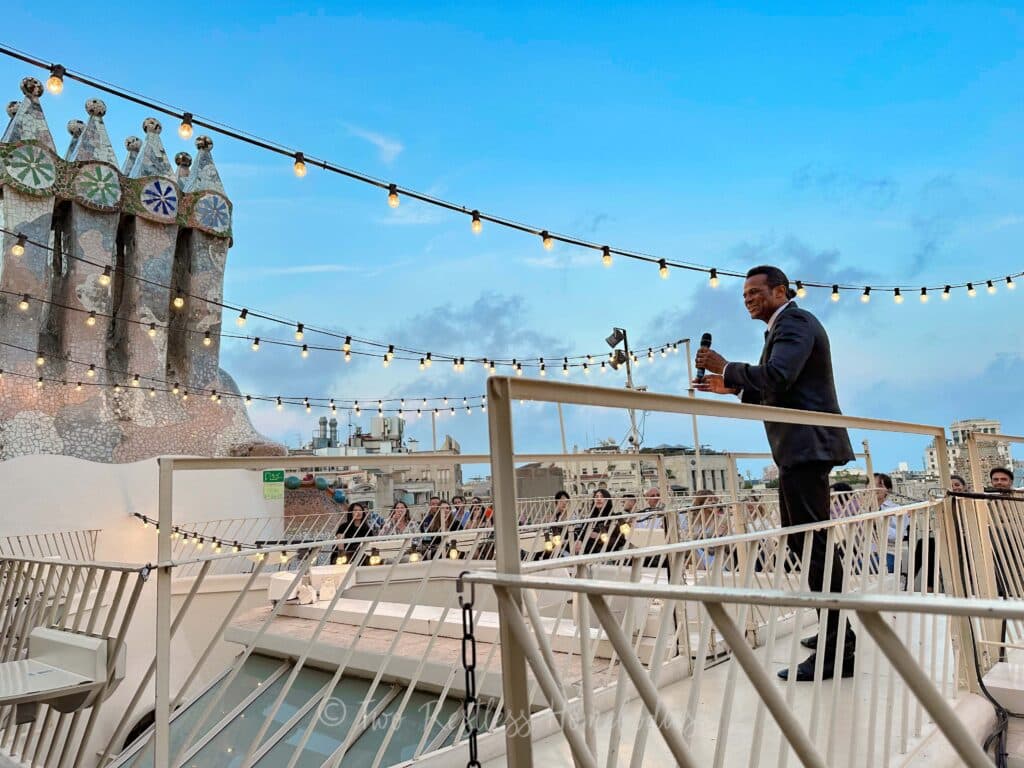
And if you visit in the warmer months like we did, you can skip the regular ticket and purchase tickets for Casa Batlló Magic Nights. There are a few tiers of tickets, but you have the opportunity to experience an early evening Casa Batlló tour, followed by a rooftop concert overlooking Barcelona. You can even make sure your admission includes a bottle of cava to enjoy during the show! The show we attended was with Lexter, and we absolutely cannot recommend this fabulous, charismatic, jack-of-all-trades performer or the venue more.
Casa Mila, or La Pedrera (Mila House)
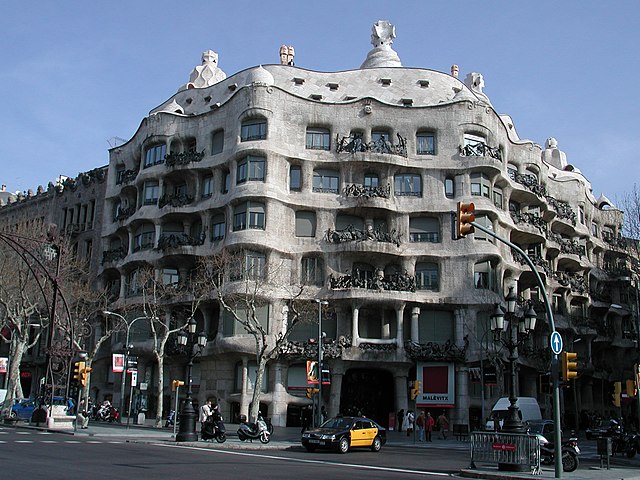
Casa Mila – locally called La Pedrera (or, “the stone quarry”) due it its severe exterior – is another of the Gaudi houses in Barcelona that is open for tours as a museum. It’s also the last private residence Gaudi designed before turning his attention exclusively to Sagrada Familia. Unlike Casa Batlló, which was nominated for a best building in Barcelona award when it was finished, La Pedrera, its owners, and its architect faced significant controversy and backlash due to the building’s colorless, “tasteless” exterior. Gaudi also intended for the interior to include many religious elements, but the most prominent of these were scrapped due to changing religious sentiments in the city at the time of construction.
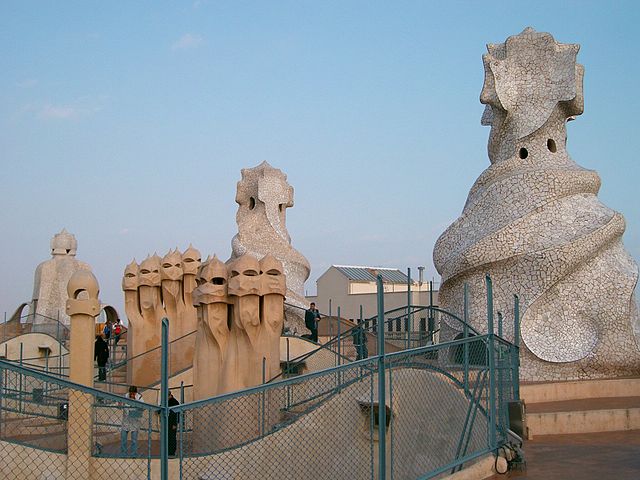

What remained of Gaudi’s vision came to life as almost a bridge between Casa Batlló and Sagrada Familia, which he was already working on at this time. His design emphasized the presence of light, as well as natural curves, and heavy sculptural elements – which are also nearly all functional.
If you purchase Casa Mila tickets for a daytime tour either on their official website or through the provider of your choice, you’ll enjoy a comprehensive exploration – whether guided or self-guided – of the apartments, patios, and other innovative spaces in Casa Mila. You can also purchase tickets to explore Casa Mila in the evening, with the notable addition of projected art installations and displays to make every curve, nook, and cranny of this sprawling building come alive.
Bonus: should you visit Casa Mila or Casa Batlló?
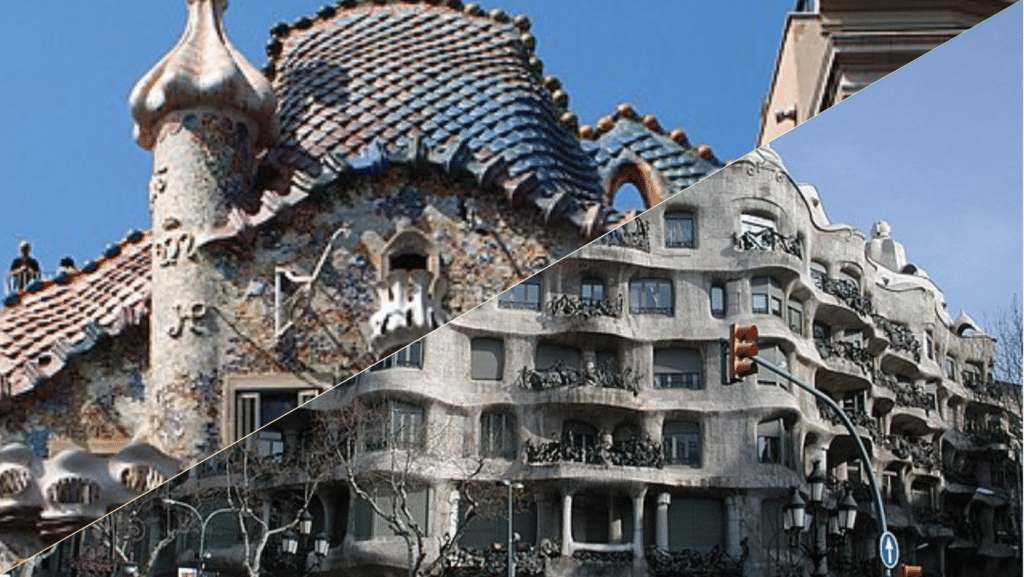
The correct answer is: you should visit Casa Mila AND Casa Batlló! But if you absolutely have to choose – as we did – we’d recommend Casa Batlló. It’s truly iconic and, when combined with experiencing Sagrada Familia, will give you the deepest and broadest understanding of Gaudi’s architectural and aesthetic genius. Sagrada Familia is a reflection of his life’s work and lifelong dedication to his faith, while Casa Batlló shows us the dreamier, more artistic side of his gifts.
For what it’s worth, Casa Batlló also has the most comprehensive gift shop, and you’re also able to shop online. So if you don’t have room in your suitcase for a bunch of modernista souvenirs, they’ve got you covered.
Next stop, let’s visit Park Güell

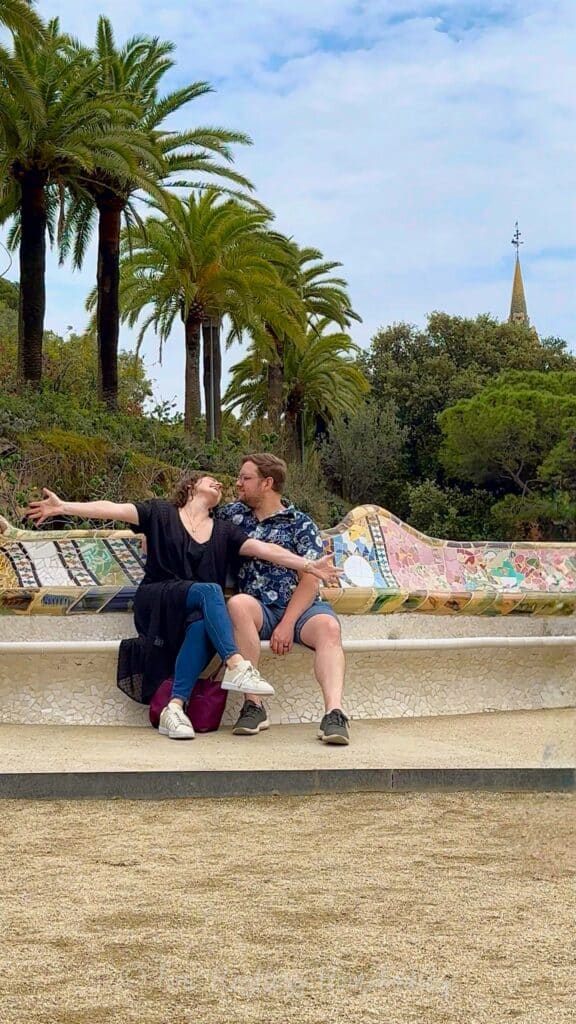
Actually, this was our first stop on our final full day in Barcelona, which we dubbed our “Gaudi Day” (more about our Gaudi Day during our 4 days in Barcelona itinerary here).
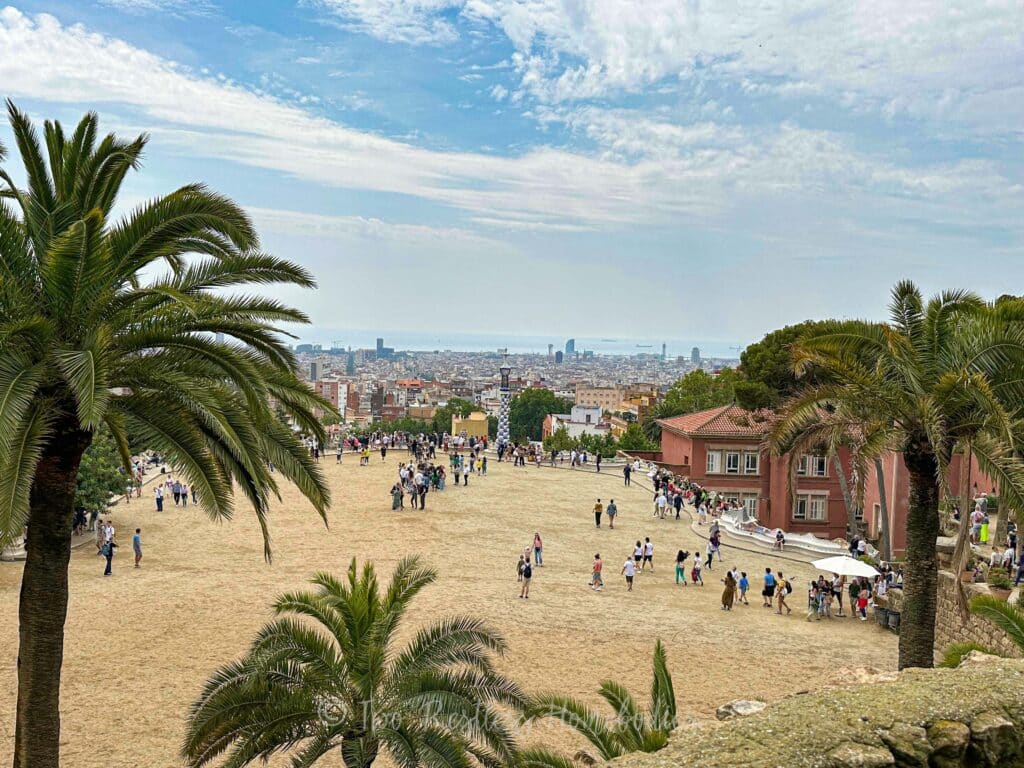
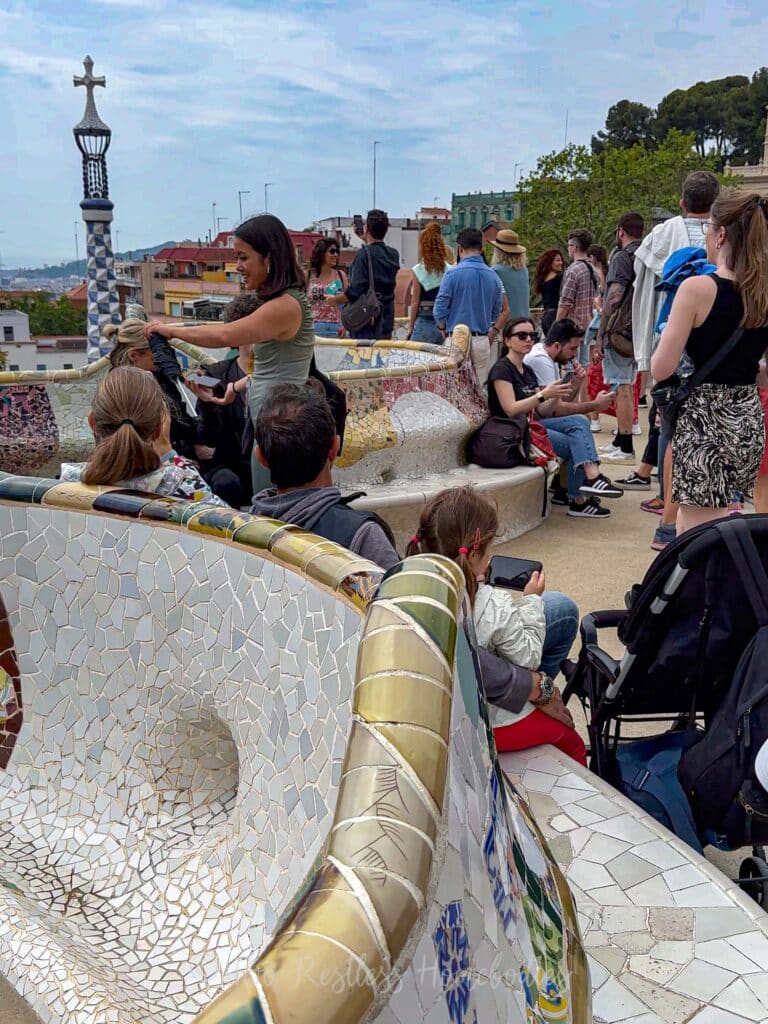
Park Güell is so famous because of Gaudi’s amazing artistic legacy, but it’s also not just a stuffy museum. It’s a beautiful municipal garden that’s well-kept, sprinkled with fanciful structures you can actually interact with, and easy to explore for families and people of all different levels of mobility. Points you absolutely must see are the iconic mosaicked benches in the shape of a sea serpent, the Hypostyle Room (just under the benches), and the Dragon Stairway (home of the Park Güell Salamander, and which leads from the park’s main entrance up to the Hypostyle Room). It’s also worth exploring all the colonnades and viaducts, as well, because they’re structurally so impressive and lovely. Finally, if you’re looking for a fabulous view of the city, ascend up to the Cavalry, or El Turó de les Tres Creus (the platform with three crosses). From this height, you’ll see an incredible panorama of the city, from Montjuïc to Sagrada Familia.
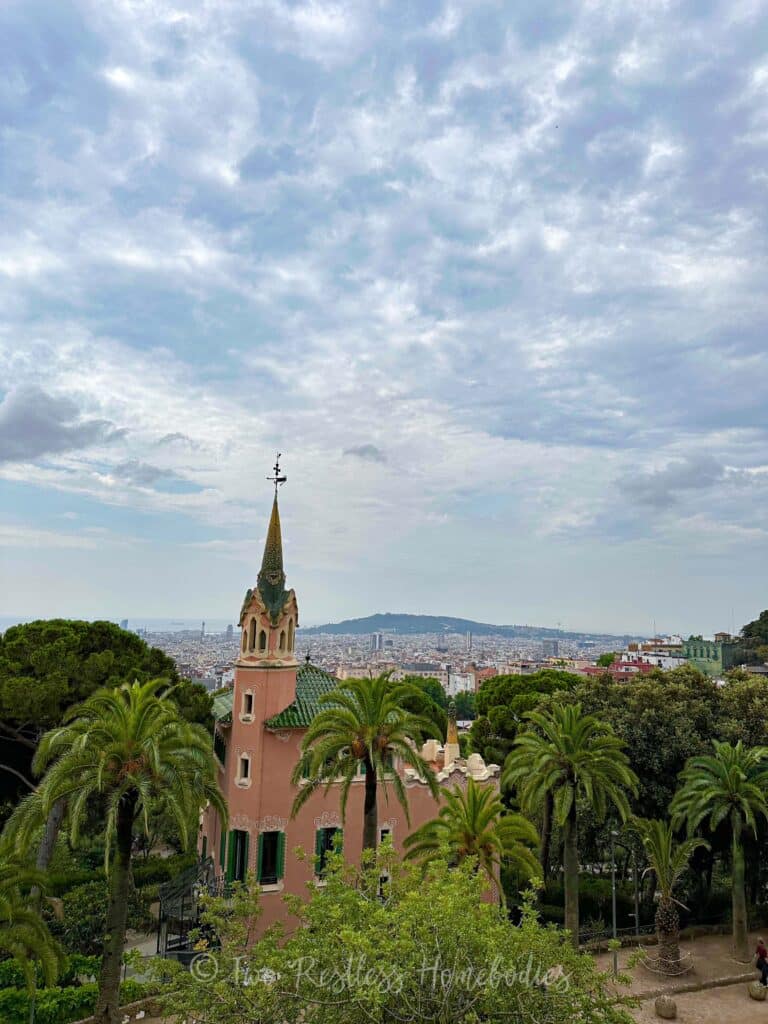

Some of Park Güell is free to enter and peruse (and the entire park used to be free), but the Park Güell monumental zone – where all the beautiful installations and Gaudi sculptures are – does now require visitors to purchase tickets, either at the door or in advance online. There are also many tour companies that provide Park Güell tours to guide groups through the park in the most efficient way while also giving you all the backstory and context so you can be sure to see and appreciate all of Gaudi’s beautiful work. And just like many other touristic landmarks and venues, the best time to visit Parc Güell is basically as early or as late as possible. We took our sweet time getting there on our own, and arrived around 11am… it was packed. There were queues for many of the attractions we wanted to see since, just like us, everyone wanted a picture with these amazing works of art.
Other things to be aware of:
- You can get to Park Güell very easily via bus and car/taxi. Park Güell metro access is slightly less convenient, with both nearby metro stations – Lesseps and Vallcarca – being about a 15-20 minute walk from Park Güell. Park Güell parking is also a bit of a challenge, as there is no dedicated onsite parking. However, as you can see from this map, there are detached car parks conveniently connected to the park via coaches/shuttles.
- If you’re not doing an organized Park Güell tour, it can be challenging to find your way around this huge park. This interactive Park Güell map will at least give you a general idea of where each fixture is and directionally how to get to them.
- Park Güell pronunciation!! Believe it or not, English-speakers, in Spanish, you’d basically ask you taxi driver to take you to “PAR-kay Well”. Just trust us on this 😉
- When you visit Park Güell, be certain to wear comfortable shoes – you’re looking at about 90-120 minutes of walking. I wore my Adidas Grand Courts and was so comfy! Also prioritize wearing sunscreen, breathable clothes, and pants or a bag that makes pickpocketing difficult. Don’t forget to stay hydrated, especially when visiting in the warmer months. There are hawkers what feels like every few steps selling bottles of cold water for cash, but we did our usual and brought our own water with us.
- Speaking of hawkers, Park Güell allows vendors/hawkers to set up blankets or tubs with their wares along the park’s walkways. In many ways, these main walkways start feeling like a mini Las Ramblas, and we saw more than one family get derailed when their kids heard the sellers demonstrating their bird whistles or bouncy balls. Keep your eyes open and your valuables close, friends!
Finally, the main event – visiting Sagrada Familia

Here’s our biggest tip for visiting Sagrada Familia: BOOK YOUR TICKETS AT LEAST A WEEK IN ADVANCE. Sagrada Familia tickets are fairly reasonable, but they sell out incredibly quickly. We wanted to explore the Sagrada Familia towers, as we had heard how beautiful they and the view could be, but the Sagrada Familia towers tickets were entirely sold out when we checked 3 days before our intended visit. That said, we still enjoyed our Sagrada Familia tour immensely.
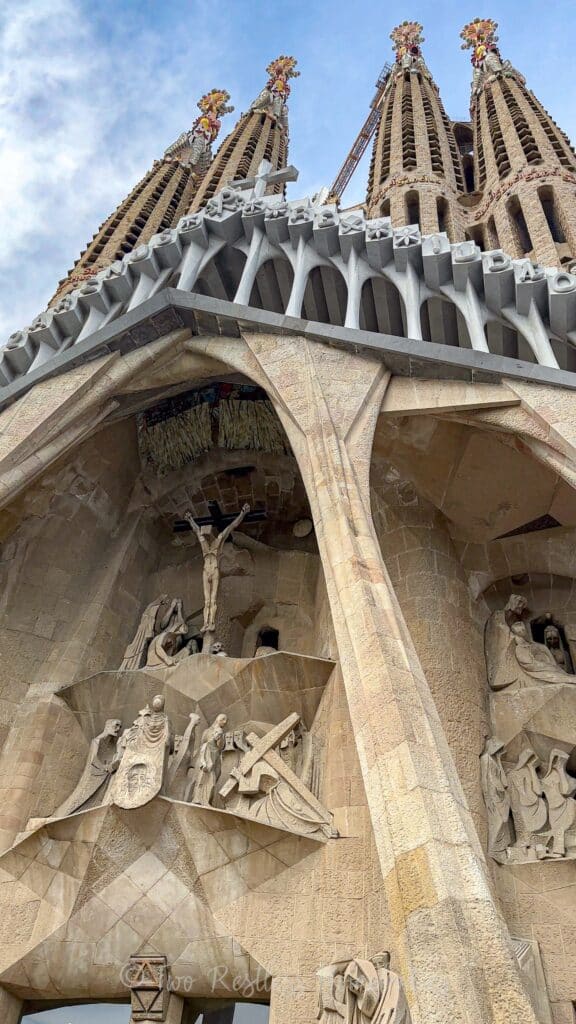
While you can get away with visiting Sagrada Familia for free, we decided that even though we weren’t able to go up in the towers, we wanted to make sure that we got all the historical and artistic context of this behemoth basilica, so we booked this Sagrada Familia tour. Our guide Raul called and texted us to let us know where to meet him, and we got down to the business of investigating Sagrada Familia. We started on the more traditionally Gothic side of the basilica, and Raul explained the depth of Gaudi’s religious devotion, as well as his devotion to this life’s work. He showed us who the most significant figures on the facade were and what they represented, and then led us inside. It’s worth noting that this tour was with a pretty big group, but we followed his little red flag around AND we had headsets, so we were able to hear him pretty easily without straining.


It’s more than worth going inside Sagrada Familia. In fact, I would say you absolutely must go inside Sagrada Familia. Even though it was loud, hectic, and completely jam packed with people, there is something shockingly magical about not only being dwarfed by the sheer magnitude of the basilica (calling them high ceilings is an understatement), but being bathed in a literal rainbow of colored light thanks to the 3 floors of stained glass windows lining at least half of the sanctuary. While the exterior is astonishing to approach, the interior of Sagrada Familia will take your breath away. And hey, we found out that if you donate €1 million, you can actually get your name written on some of the as-yet unfinished stained glass! A little rich for our blood, sadly 😅


While you’re there, you’re also likely to hear the organ play and may also hear the bells chime. This may not be your usual reverent visit to a religious location, but it’s certainly a feast for the eyes and ears, as well as the spirit. We emerged from the sanctuary and went to the basilica’s other facade, this one shockingly modern. Sadly, we didn’t have access to either of the open towers, so we were finally released from the tour and pointed in the direction of the onsite museum and gift shop. The museum is fascinating in its own right, as it shows visitors all the work and steps required to develop the ideas, models, and finally the actual building of Sagrada Familia.

Other things to know about visiting Sagrada Familia:
- You can easily do Park Güell and Sagrada Familia in the same day! In fact, on our last day in Barcelona, we had our “Gaudi Day” and visited Park Güell, Sagrada Familia, and Casa Batllo in one day, and nearly had time to fit Casa Mila in, as well (but we decided to stop for an extended rooftop lunch and cocktails instead, whoops 🤷🏻♀️🤷♂️). There are also plenty of Gaudi tours you can book with this exact combo of stops.
- It’s recommended that you dress conservatively when you visit. I’m not sure what the enforcement looks like, but all guidelines we saw in person and online suggested making sure your shoulders, cleavage, and knees are fairly modestly covered. Basically, dress like you’re going to church… because you are. This goes for all visitors, not just women. They also specifically call out flipflops as a no-go, so take that under advisement, as well.
- To get into the church at all, you’ll need to submit to a security screening – basically, a bag search and a metal detector. Small backpacks and purses were allowed, but they specifically ask visitors not to bring large backpacks, as they can hold up the security screening process.
- You’ll want to afford at least 2 hours to you visit to Sagrada Familia. There’s a lot to see and learn!
- There are vending machines onsite, just after the tour and before the museum entrance, just in case you didn’t bring your travel water bottle with you.
Heading to Barcelona soon, or wishing you were? Pin this post and come back to it later!


 Spending a weekend in Barcelona: is a weekend trip to Barcelona worth it?